
A Safety Guide for Rainwater Harvesting

//
Sultan Kiani /
Dr. Farrukh A. Chishtie
In an effort to tackle water scarcity, the Capital Development Authority has recently made installation of rainwater harvesting systems mandatory in Islamabad. Rainwater harvesting is a simple, effective and sustainable approach to natural resource conservation.

Other than reservoir storage, rainwater may also be used for groundwater recharge. It reduces dependence on conventional water supplies, saves costs and energy, and helps control storm water runoff, which is vital for urban flood management. However, appropriate precautionary measures are required to minimize the safety, health, and environmental hazards involved in the installation and maintenance of rainwater harvesting systems.
Preventing Mosquito Breeding
Freshwater reservoirs can become hotspots for mosquito breeding, which may cause the spread of viral diseases such as dengue and malaria. Keeping rainwater tanks properly covered helps prevent mosquito infestation. Besides this, tank overflow should be drained away from the storage area to avoid pools of stagnant water. These simple precautions can effectively tackle a serious public health hazard.
Cleaning Water Tanks
Tanks used for storing rainwater may require frequent cleaning, which should be performed carefully. Entering a water tank is considered confined space work, which requires active supervision and other standard safety measures. Before cleaning the tank, make sure it is not too hot and that there is sufficient oxygen to breathe in order to reduce the risks of heat exhaustion and asphyxiation. Deep and large water tanks should only be cleaned by trained workers equipped with appropriate safety equipment.

Safe Use of Rainwater: Multi-barrier filtration
Water from rainfall is generally considered one of the purest forms of freshwater. Now the question arises, is rainwater safe to drink? The typical answer is no; rainwater may not be safe for drinking in many cases for several reasons. Falling rainwater droplets may absorb hazardous air pollutants. Similarly, dirty catchment areas such as rooftops, and unclean storage tanks could also contaminate the rainwater.
Although rainwater can be safely consumed after a proper treatment process, it may not be economically practical where better potable water sources are available. Untreated rainwater should preferably be used for gardening and washing purposes. Using rainwater for bathing or dishwashing may require suitable filtration to remove impurities. Here’s details on how to use suitable filtration.
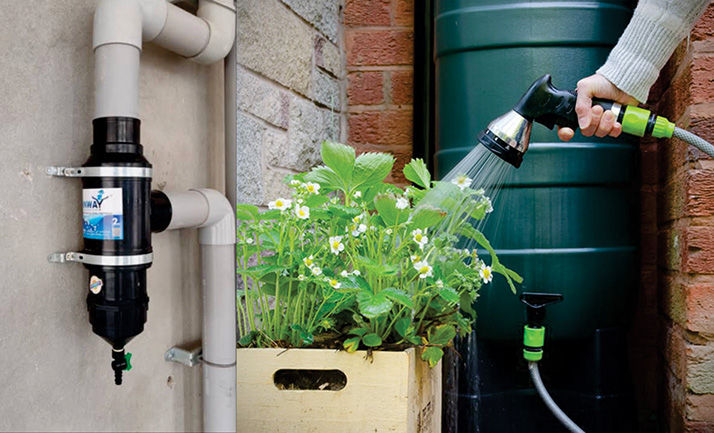
Treating harvested rainwater requires a multi-barrier approach that transitions from mechanical screening to advanced filtration and final disinfection. Because atmospheric rainwater carries fine particulate matter, microbes, and widespread trace chemical pollutants like PFAS ("forever chemicals"), proper sequencing is critical to ensure the water is safe for domestic or potable use.
Physical Pre-Treatment (Catchment & Cistern)
Before the water even reaches your filtration system, large debris must be separated at the point of collection.
First-Flush Diverters: The initial rainfall of a storm sweeps away accumulated bird droppings, dust, and airborne pollutants from the roof. A first-flush diverter isolates and discards the first few gallons of water before allowing the cleaner, subsequent runoff to enter the main tank.
Inlet Strainer Baskets: Fine mesh screens installed at the storage tank's inlet capture leaves, twigs, and insects, while simultaneously serving as a physical barrier to prevent mosquito breeding.
2. Multi-Stage Filtration (Particulates & Chemicals)
Once the water is in the tank, it must pass through a progression of filters to target microscopic hazards.
Mechanical Microfiltration (Sediment Filters): Passing water through successive physical filters, such as a 50-micron sediment filter followed by a 5-micron or 1-micron pleated cartridge, removes suspended solids, sand, and larger parasites. Emerging decentralized solutions also utilize gravity-driven ceramic microfilters to strip away high percentages of turbidity and bacterial pathogens without requiring heavy electrical power.
Adsorption (Activated Carbon & Biochar): Raw filtration cannot eliminate dissolved chemicals. Incorporating Granular Activated Carbon (GAC) or black-carbon/biochar filters is essential (Hawkins et al., 2024). These mediums rely on a high surface area to adsorb organic compounds, heavy metals, synthetic pesticides, and significantly reduce industrial chemical pollutants like PFAS.
3. Disinfection (Pathogen Elimination)
Filtration removes particles and chemicals, but a final disinfection step is mandatory to eliminate remaining viruses, bacteria, and cysts.
Ultraviolet (UV) Sterilization: Passing the filtered water through a UV light chamber is highly effective for decentralized systems. UV light alters the DNA/RNA of pathogens like E. coli, Cryptosporidium, and Giardia, neutralizing them without altering the taste or introducing chemical disinfection by-products.
Chlorination: If UV is unavailable, dosing the water with small, carefully measured amounts of chlorine remains a highly affordable and effective way to kill pathogens. Unlike UV, chlorination provides a "residual effect," meaning it keeps killing bacteria if the treated water sits in pipes or a secondary household pressure tank for a period.
Risk of Drowning
While it is rare for adults to drown in domestic rainwater tanks, there have been reported incidents of children drowning. Hence, it is important to keep the water tank covered, preferably with a child-resistant lid. When the cover is removed for cleaning or any other reason, the tank should not be left unsupervised and must be kept inaccessible to children. These safety measures also prevent pets and wildlife (e.g. birds, cats etc.) from falling into rainwater tanks.
Risk of Electric Shock
Rainwater installations must not touch any electrical sources to prevent the risk of electrocution. Water tanks and connected piping should not come into contact with power cables. Installing rainwater systems near PV solar panels requires additional caution. Avoid taking standard (high-voltage) electrical lights inside the water tank while cleaning. Only use battery-powered or safe low-voltage lighting inside the tank.
Aquifer Contamination
While untreated rainwater may be used for gardening, washing, and industrial processes, improper groundwater recharge may cause more harm than good. As we know, rainwater likely contains various impurities, so directly channeling water from rooftops’ runoff into a groundwater source such as a borehole could potentially contaminate the aquifer. Groundwater recharge using rainwater should only be carried out through safe and properly designed recharge wells that filter impurities to prevent aquifer contamination.

Constructing Safe Recharge Wells
Recharge points should be carefully assessed for different types of risks. For example, recharge wells should not be set up near potential contamination sources such as septic tanks and underground chemical storage facilities. Similarly, groundwater recharge is not suitable in waterlogged regions, i.e. where the water table is already close to the surface. Excess groundwater recharge in such areas may exacerbate waterlogging, which can potentially harm plants, agricultural land and damage foundations of buildings in surrounding areas.
Check your local regulations and safety guidelines for setting up a rainwater harvesting system. Always hire qualified professionals to develop groundwater recharge systems. You may consult relevant organizations such as the Pakistan Council of Research in Water Resources (PCRWR) for detailed guidance.
Following these simple and practical safety tips can be helpful in managing health, safety, and environmental risks associated with rainwater harvesting and groundwater recharge.



Comments