
Keeping Our Schools Safe: A Collective Responsibility

//
Sultan Kiani
Public schools play a vital role in fostering academic, social, and personal development. While many factors contribute to making a school a good place to learn, safety should always come first. Educational institutions face a range of public safety hazards and security threats that must be effectively managed to minimize risks.

As schools reopen after the long summer holidays, we identify some common hazards and offer practical safety measures to help keep everyone safe at school.
Safe Transportation to School
Precautionary measures should begin from the moment students leave home for school. Younger children are particularly vulnerable to road accidents and therefore require careful supervision while commuting. The following measures can help keep them safe:
Children should learn basic road safety awareness from an early age. This includes learning how to cross the roads safely, use school buses properly, and seek assistance from adults when required.
Younger children should be accompanied to school by an adult or, at the very least, by a responsible older student who can help keep them safe on the road.
School buses and vans should be roadworthy, driven by trained and licensed drivers, and should never exceed their permitted passenger capacity. The use of LPG fuel in school transport is also prohibited under the law.
Underage children must not operate motorized vehicles that require a driver's licence. Riding a bicycle to school should only be allowed for shorter journeys along safe routes and after the child has received adequate road safety training. Riding bicycles or scooters on highways without protected lanes is unsafe for children and young teenagers.
Safe pedestrian crossings should be provided near school pick-up and drop-off zones during school hours.
School Building Safety Measures
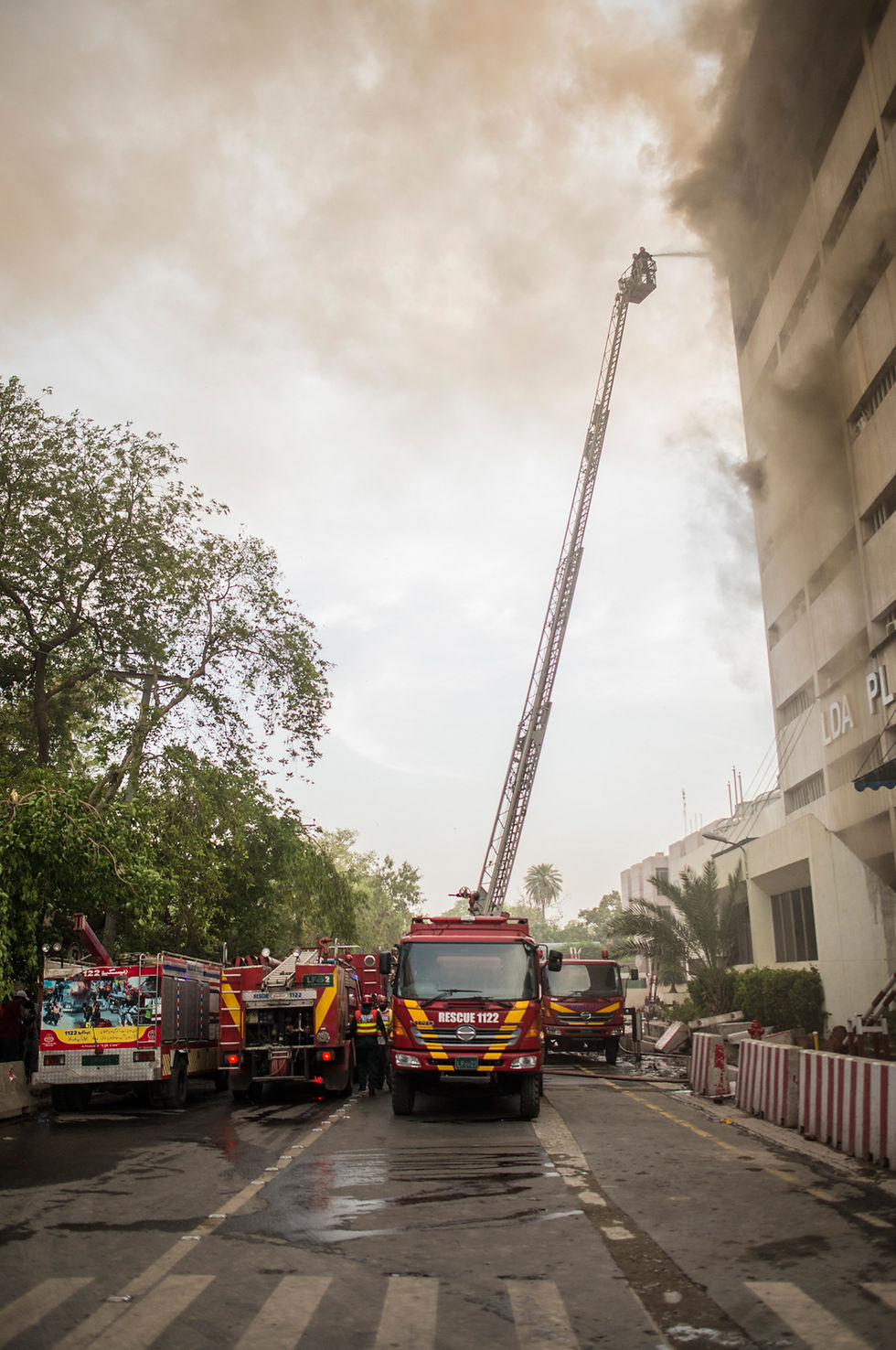
Our previous edition discussed the importance of building safety in detail, including recent tragic school building incidents in Lahore. While all buildings must meet basic legal safety requirements, schools should follow even stricter standards because they accommodate children and other vulnerable groups. Some essential campus safety measures include:
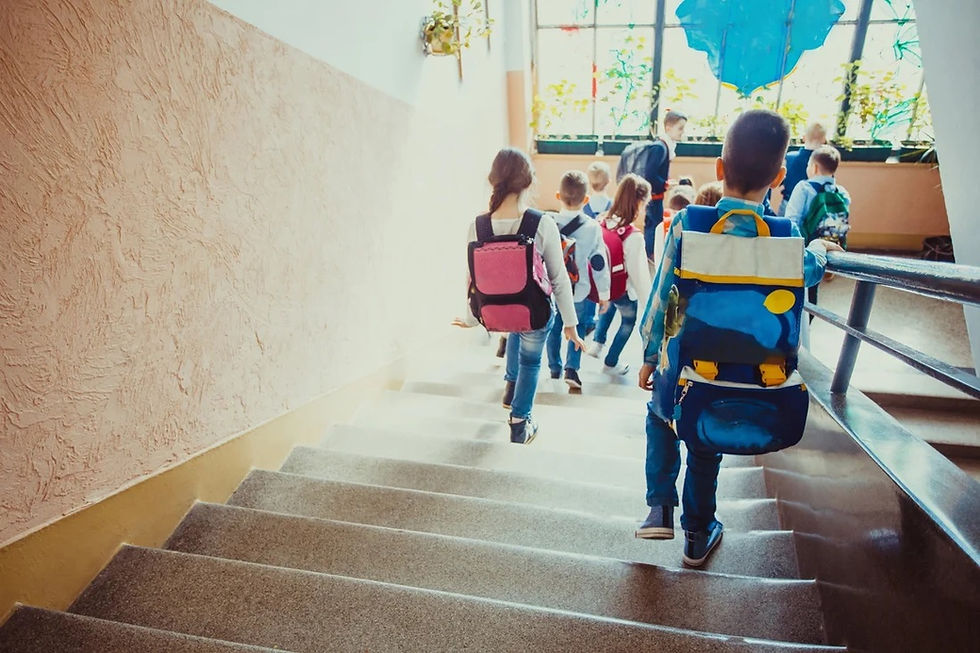
Floors and stairs should remain free from slip and trip hazards to help prevent falls. Staircases should be equipped with secure guardrails and designed with children's safety in mind.
Bathrooms and handwashing facilities should be clean, adequate, and safe for students to use.
All classrooms should have access to clearly marked emergency exits to allow rapid evacuation in the event of a fire or other emergency.
Electrical sockets, wiring, and cables should be properly installed, protected, and regularly maintained to reduce the risk of electric shock or fire.
School buildings should be equipped with functional smoke alarms and adequate firefighting equipment.
Periodic building safety inspections should be conducted to ensure that the campus remains safe. It is particularly important to inspect structural integrity after floods, strong earthquakes, or other events that could damage buildings.
Small-scale and urgent maintenance work may be carried out during school hours only when the work area can be completely cordoned off and made inaccessible to students.
Major construction work should be undertaken during school holidays whenever possible to protect students from construction-related hazards.

Enhancing Security
Schools face both internal and external security threats. School management should implement appropriate security measures to prevent unauthorized access and the entry of illegal or harmful items, including firearms and sharp objects, onto the campus.
Students, faculty members, staff, and visitors should undergo appropriate security checks when entering the school campus.
Surveillance cameras should be installed at appropriate locations both inside and outside the campus to help monitor security.
School events, including annual functions and large gatherings, may require additional security arrangements.
Teachers and other staff members should undergo appropriate background checks before employment.
Pick-up and drop-off zones should also be supervised by security personnel because these areas can be particularly vulnerable to child abduction and other security risks.
Security personnel should promptly report any changes in the security situation or emerging threats to the principal or designated school authorities.
Students should be taught how to recognize potential security concerns and report them promptly to teachers or school management.
In addition to physical security, schools should also take appropriate measures to maintain cybersecurity and protect students, teachers, and school systems from online threats.
Maintaining a Friendly Learning Environment
Schools should provide a friendly, respectful, and supportive environment that allows students to learn and develop with confidence. Hostile relationships, unnecessarily harsh punishments, harassment, and bullying are serious internal safety concerns. They can undermine the learning experience and, in some cases, contribute to severe emotional or behavioural consequences.
Schools should foster a culture of mutual respect among students, teachers, and staff. Complaints should be handled fairly, and constructive suggestions should be taken seriously.
Disciplinary action may sometimes be necessary, but illegal, humiliating, violent, or abusive methods should never be used under any circumstances.
Students should be taught that bullying is harmful and unacceptable. Respect, empathy, and kindness should instead be encouraged as essential values of school life.
Students who repeatedly display aggressive behaviour should receive appropriate intervention and support. Where a serious and continuing risk to others remains, school authorities should take proportionate action in accordance with applicable policies and child protection principles.
Students with special educational or support needs should receive appropriate attention to strengthen their self-esteem, participation, safety, and overall well-being.
Emergency Preparedness
Even when schools follow safety rules carefully, emergencies can still occur without warning. Being properly prepared can reduce their impact and save lives. Some basic measures include:
A well-stocked first-aid kit should be kept in an easily accessible location. Teachers, staff members, and appropriately aged senior students should receive basic first-aid training.
School management should develop a clear procedure for transferring students or staff to a hospital during medical emergencies, with defined roles and responsibilities.
Relevant medical history, emergency contact details, and information about serious medication or food allergies should be readily available when needed.
Regular fire drills and building evacuation exercises can help schools respond quickly and safely during real emergencies.
Staff should receive crisis-management training on how to respond safely and effectively to different security threats. Students should also know where to take shelter or assemble during an emergency.
School management should develop emergency protocols for natural disasters and severe weather events, including thunderstorms, earthquakes, floods, and extreme heat.

Keeping our schools safe and secure is a shared responsibility. It requires the collective efforts of school management, teachers, students, parents, transport providers, security personnel, and public authorities. Government departments and regulatory bodies must also monitor compliance and take appropriate action to ensure that essential regulations are properly enforced, including building safety standards, security requirements, emergency preparedness measures, and school transport rules.
A safe school does more than protect children from immediate harm. It creates an environment in which students can learn confidently, teachers can work effectively, and parents can trust that their children are being cared for responsibly. School safety should therefore never be treated as an optional administrative requirement. It is a fundamental part of providing every child with a secure and supportive education.


Comments