
Climate Impacts and Pakistan: Ethical action for occupational security in a warming world

//
Dr. Farrukh A. Chishtie
World Environment Day 2026 arrived with a message Pakistan cannot afford to treat as ceremonial. This year’s global focus is climate action, with Azerbaijan hosting the international commemoration in Baku. The campaign asks us to notice the urgent signals the Earth is sending, and to ask what signals humanity will send back through its choices. For Pakistan, this question is not distant or abstract. It is already being answered in our homes, farms, cities, hospitals, mountains, rivers, and coastlines. Our choices and actions really matter, and aligning these with ethics is the correct path forward.

The signals are everywhere. Heat is arriving earlier and staying longer. Karachi has faced brutal temperatures that have strained health facilities, water access, electricity supply, and daily life. Northern Pakistan faces rising risks from glacial lake outburst floods as warming accelerates snow and glacier melt. Cities are heating under concrete and asphalt. Floods are becoming more destructive where drains are blocked, wetlands are weakened, and natural waterways are encroached. Water stress is growing sharper in both rural and urban areas. Smog, unsafe water, plastic pollution, biodiversity loss, and heat stress are no longer separate issues. They are part of one larger crisis of how we live with nature.
Climate change is often described through numbers: degrees of warming, millimetres of rainfall, parts per million of carbon dioxide, or percentages of above-normal temperatures. These numbers matter, but they do not tell the whole human story. The real experience of climate change is a child unable to sleep in a hot room, a labourer working under a dangerous sun, a farmer watching crops fail, a mother stretching stored water for cooking and hygiene, an older person struggling to breathe during polluted heat, and a family cleaning mud and sewage from the house after sudden flooding.
This is why climate action must be understood as a national safety issue. It is not only about reducing emissions, planting trees, or attending international conferences. It is about protecting daily life. It is about whether people can work, study, worship, travel, care for family, grow food, rest, and live with dignity in a changing climate.
Pakistan is among the countries where climate impacts are felt deeply, even though the poorest communities have contributed least to the crisis. This injustice should be named clearly. But naming injustice is not enough. We also need action that is ethical, practical, and sustained. We need responses that are not driven by slogans, panic, or short-term publicity, but by values that protect life.
This cover story uses the occupational security lens to frame climate action in Pakistan. Occupational security asks a simple but powerful question: are people and the living world around them able to carry out life-sustaining activities safely, peacefully, and with dignity? When climate change makes work unsafe, water scarce, homes unlivable, farms unstable, and ecosystems fragile, occupational security is threatened.
World Environment Day 2026 gives Pakistan an opportunity to move beyond awareness. Awareness without action becomes fatigue. Action without ethics becomes shallow. Ethical climate action means protecting those most exposed, restoring nature rather than exploiting it, telling the truth about risks, and making decisions that serve life over convenience and profit.
Pakistan’s response must therefore be values-bounded at every level: household, community, city, province, industry, and state. Climate action must become part of how we build homes, run schools, plan cities, protect workers, manage water, restore forests, report data, and care for the vulnerable. The signal from the Earth is clear. The question now is whether our response will be clear enough.
Climate change as an occupational security crisis
The climate crisis becomes most real when it disrupts ordinary life. A heatwave is not only a weather event. It is the loss of safe work, safe sleep, safe mobility, and safe caregiving. A drought is not only a shortage of rain. It is the loss of hygiene, food security, livestock health, and peace within communities competing over water. A flood is not only water on the streets. It is the collapse of routine, schooling, employment, health care, privacy, and dignity.

This is where occupational security gives Pakistan a practical and ethical framework. Occupational security means the sustainable, just, compassionate, peaceful, authentic, and accurate protection of humans’ and non-humans’ right to safe and dignified life. It expands security beyond borders and weapons and brings it into daily living. It also includes non-human life and life-sustaining elements such as air, water, land, energy, animals, plants, rivers, soils, and ecosystems.
This matters because climate change is not only harming humans. It is disturbing the occupations of the entire living world. Birds lose nesting habitats when trees are cut. Fish lose oxygen and breeding conditions when water is polluted or overheated. Soil organisms are harmed by chemicals, drought, and erosion. Trees lose their ability to cool and shelter cities when they are replaced by concrete. Rivers lose their natural flow when they are treated only as drains or extraction channels. When non-human life is weakened, human life becomes insecure too.
Occupational security is grounded in five values that Pakistan urgently needs in climate action: sustainability, justice, peace, compassion, and authenticity with accuracy.
Sustainability asks whether our actions protect life over the long term. A development model that cuts trees, blocks waterways, wastes water, and increases heat is not development. It is future harm. Sustainable climate action means restoring wetlands, protecting indigenous trees, conserving water, reducing pollution, improving building design, and planning cities around life rather than concrete alone.
Justice asks who is protected and who is abandoned. Climate impacts do not fall equally. Wealthier households can often buy generators, air-conditioners, water tankers, and safer housing. Poor families, outdoor workers, farmers, women, children, elders, informal settlements, and persons with disabilities absorb the harshest risks. Climate action without justice becomes another privilege. Ethical climate action must place the most vulnerable first.
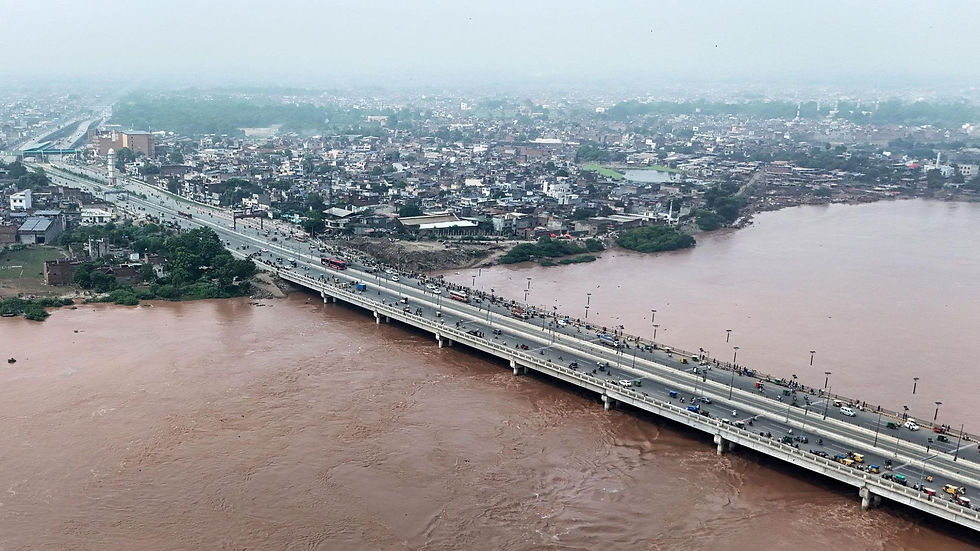
Peace asks whether climate stress is increasing conflict, fear, and social breakdown. Heat, water scarcity, displacement, food stress, and disease can all deepen tensions. Protecting peace means fair water access, dignified disaster response, transparent relief, community mediation, and policies that reduce desperation before it turns into conflict.
Compassion asks whether we notice suffering early enough to prevent it. Compassion is checking on elderly neighbours during heatwaves, protecting workers from dangerous sun exposure, creating cooling spaces, saving water for shared survival, and extending care to animals and trees during extreme heat. Compassion must become public policy, not only private kindness.
Authenticity with accuracy asks whether we are telling the truth. Pakistan cannot afford fake plantation numbers, hidden heat deaths, vague flood warnings, or cosmetic climate projects. People need accurate heat alerts, honest air and water monitoring, public flood-risk maps, transparent disaster spending, and measurable climate adaptation outcomes. Without truth, trust collapses. Without trust, collective action fails.
Through this lens, climate action becomes more than environmental management. It becomes the protection of daily life with dignity. It becomes a duty to humans and non-humans alike. It becomes a national ethic.
Pakistan does not need climate action that exists only in speeches. It needs climate action that can be felt in cooler homes, safer workplaces, cleaner air, protected water, restored ecosystems, honest governance, and communities that can face summer, drought, and floods with courage instead of helplessness.
Pakistan at the climate front line
Pakistan’s climate reality is severe because several hazards are now converging. Heatwaves, drought stress, glacial melt, floods, smog, water contamination, biodiversity loss, and urban crowding are no longer separate chapters. They overlap and reinforce one another. A hotter summer increases electricity demand and water use. Water scarcity weakens hygiene and food security. Sudden heavy rainfall overwhelms drains and spreads disease. Glacial melt raises mountain flood risks. Smog and heat together intensify respiratory and cardiovascular stress.
This convergence is what makes climate change so dangerous. It does not arrive as one problem with one solution. It arrives as a chain reaction across daily life. A family may face heat stress in May, tanker dependence in June, urban flooding in July, dengue risk in August, and respiratory illness later in the year. The same household becomes exposed again and again, and each exposure weakens resilience for the next one.
Pakistan’s geography makes the danger sharper. The northern mountains hold glaciers that feed river systems but are becoming more unstable as temperatures rise. The Indus Basin supports agriculture and livelihoods but faces stress from changing rainfall, heat, and water demand. Coastal areas such as Karachi face heat, humidity, drainage failure, sea pressure, and pollution. Large cities such as Lahore, Rawalpindi, Islamabad, Multan, Hyderabad, Peshawar, and Quetta face their own combinations of heat, poor air, weak drainage, and pressure on housing and public services.
The crisis is also social. Climate impacts do not fall on a blank map. They fall on a country already struggling with poverty, inequality, fragile health services, informal settlements, water governance gaps, and uneven enforcement of environmental laws. Climate change therefore acts as a force multiplier. It magnifies existing weaknesses. Where housing is poor, heat becomes more dangerous. Where drains are clogged, rain becomes flood. Where water is unsafe, drought and flood both become disease risks. Where livelihoods are insecure, disaster becomes debt and displacement.
This is why Pakistan’s climate action must be rooted in justice. If climate policy protects only formal neighbourhoods, elite housing schemes, and those who can afford private adaptation, it will fail morally and practically. The workers who build our cities, clean our streets, grow our food, deliver our goods, and serve our homes are often the most exposed to climate extremes. If they remain unprotected, the whole society remains insecure.
The occupational security lens makes this visible. It asks us to look at who can continue daily life safely and who cannot. Can a brick-kiln worker survive a heatwave without shade and water? Can a schoolchild learn in a classroom that traps heat? Can a nurse reach work during urban flooding? Can a farmer sustain crops when rainfall shifts and irrigation fail? Can birds, bees, fish, soil organisms, and trees continue their own life-sustaining roles when habitats are polluted, overheated, or destroyed?
Climate action in Pakistan must answer these questions honestly. It must move beyond symbolic tree plantation, one-time relief packages, and emergency speeches. It must become a planned transformation of how we build, plant, farm, travel, cool, drain, conserve, and govern.
The dire situation does not mean helplessness. It means urgency. Pakistan already has traditions of adaptation, conservation, water wisdom, local planting knowledge, and community solidarity. What is needed now is to combine these strengths with modern science, honest data, ethical governance, and the values of occupational security. The path forward is not to fight nature harder. The path forward is to restore balance with nature while protecting people with dignity.

Heatwaves and cities: when exposure becomes injustice
Heat is now one of Pakistan’s most direct climate threats. It is silent, fast, and often underestimated. Unlike floods, heat does not always leave dramatic images behind. Yet it can be deadly. It weakens the body, worsens chronic disease, reduces sleep, lowers productivity, increases irritability, and pushes hospitals during the very months when electricity and water systems are also under pressure.
In cities, heat becomes more dangerous because of the way we have built. Concrete, asphalt, glass, metal roofs, and paved surfaces absorb sunlight and release heat slowly. Trees and open soil, which once cooled neighbourhoods, are replaced by hard surfaces. Narrow streets trap heat. Poor ventilation keeps rooms hot through the night. This is the urban heat island effect, and it turns ordinary neighbourhoods into heat traps.
The injustice is clear. A wealthy family can install air-conditioning, improve insulation, run a generator, and leave for cooler areas when heat becomes unbearable. A low-income family may live in a crowded room with poor airflow, a hot roof, and unreliable electricity. Outdoor workers cannot simply stay indoors. Street vendors, traffic police, construction labourers, waste collectors, farmers, delivery riders, and security guards often remain exposed during the most dangerous hours.
Occupational security helps us see that heat is not only a health issue. It is an occupational injustice. It threatens the ability to work safely, study effectively, care for family, move through the city, and rest at night. It also threatens non-human life. Birds, insects, street animals, urban trees, soil life, and small urban ecosystems suffer when heat is intensified by human design.
Ethical climate action must therefore begin with heat protection. Every city should have a heat action plan that includes early warnings, public messaging, hospital preparedness, ambulance coordination, cooling spaces, and worker protections. Schools should be allowed to adjust timings during extreme heat. Employers should provide shade, water, rest breaks, and flexible schedules for outdoor workers. Labour protection during heatwaves should not be optional.
Homes and neighbourhoods also need practical change. Cool roofs, reflective coatings, roof insulation, shaded windows, ventilated roof spaces, and planted shade can reduce indoor heat. Community cooling spaces can be created in mosques, schools, clinics, libraries, and community halls during heat emergencies. Public water points should be available in markets, bus stops, and labour areas.
Indigenous plantation must be part of the heat response. Planting suitable native trees is not decoration. It is climate infrastructure. Indigenous trees are often better adapted to local soils, rainfall, heat, and biodiversity needs than ornamental species. They provide shade, reduce surface temperatures, support birds and pollinators, improve air quality, and create calmer public spaces. But plantation must be honest. A tree campaign should not be measured only by saplings planted. It should be measured by survival, species suitability, canopy created, water use, and community care.
Heat protection also requires authenticity with accuracy. Heat illness and heat deaths must be counted honestly. Air and temperature warnings must be clear and timely. Public claims about climate action must be measurable. If authorities say cooling centres exist, people should know where they are and how to access them. If tree plantation is announced, survival rates should be reported. Truth is not a technical detail. It is a safety requirement.
Pakistan’s cities can still become more livable, but only if they stop treating heat as an inconvenience and start treating it as a public health and justice emergency. In the age of climate change, shade is security, water is security, ventilation is security, and trees are security.
Water, floods, and the ethics of survival
If heat is Pakistan’s most immediate climate warning, water is its deepest security question. Climate change is altering the water cycle. Hotter air increases evaporation dries soils faster, and increases demand for drinking water, irrigation, and cooling. At the same time, warmer air can hold more moisture, so when rain arrives, it can fall in heavier bursts. This is why Pakistan can face drought stress and flooding in the same season.
Water insecurity does not remain in rivers and reservoirs. It enters the home. It affects bathing, cooking, cleaning, prayer, childcare, livestock, agriculture, and dignity. When water is scarce, illness spreads more easily and tensions rise. When water arrives as floodwater, it destroys property, contaminates drinking supplies, spreads disease, and turns streets into hazards. In both cases, the daily occupations of life are disrupted.
This is why climate action in Pakistan must place water at the centre. Occupational security reminds us that water is not merely a resource. It is a life-sustaining element tied to the safety of humans and non-humans. Rivers, wetlands, soils, trees, birds, animals, fish, farmers, children, and cities all depend on how water is protected and shared.

Rainwater harvesting is one of the most practical actions Pakistan can normalize. At the household level, this may begin with a clean drum or tank placed under a roof outlet to collect rainwater for cleaning, gardening, and other non-drinking uses. A simple first-flush method can improve quality by allowing the first few minutes of dirty roof runoff to drain away before collection begins. Containers should remain covered to prevent mosquitoes. At the community level, schools, mosques, parks, and public buildings can install larger rainwater harvesting systems to support gardens, cleaning, and groundwater recharge.
Rainwater harvesting is not only about saving water. It changes our relationship with rainfall. Instead of treating rain only as a nuisance that floods streets, we begin treating it as a blessing to be slowed, stored, and respected.
Flood resilience must follow the same logic. Pakistan’s cities cannot keep paving every surface, blocking natural drainage, dumping plastic into nullahs, and then blaming the rain. Urban flooding is often the result of poor planning meeting extreme rainfall. Prevention requires drain maintenance before monsoon, protection of natural waterways, strict action against encroachments, restoration of wetlands, and better solid waste management so plastic does not choke drainage systems.
In northern Pakistan, glacial lake outburst floods require early warning systems, evacuation routes, slope monitoring, and local preparedness. Mountain communities must not be left alone to face hazards created by a warming world. Climate justice means giving vulnerable regions the tools, infrastructure, and support needed to protect life.
Indigenous plantation as climate action
Pakistan’s climate response must also restore living shade. Indigenous plantation is one of the most important long-term solutions because native trees are adapted to local climates, support local biodiversity, and often require less water once established. They cool streets, protect soils, slow runoff, provide habitat for birds and pollinators, and make neighbourhoods more livable.
But plantation must be honest. Pakistan does not need campaigns that count saplings for photographs and forget them after a week. A true plantation effort must measure survival, species suitability, water needs, canopy growth, and community care. A single healthy native tree that survives for decades is worth more than hundreds of neglected saplings.
Different regions need different species. Urban planners, botanists, local communities, and environmental groups should work together to select appropriate indigenous trees for each climate zone. In hot urban plains, shade and drought tolerance matter. In northern areas, soil stabilization and ecosystem fit matter. In coastal zones, mangrove protection and restoration must be treated as climate defense.
Indigenous plantation also carries an ethical meaning. It is a way of acknowledging that human settlements are not separate from nature. Birds need branches. Soil needs roots. People need shade. Children need green spaces. Cities need breathing room. When we plant and protect wisely, we repair relationships that reckless development has broken.
Climate action at every level
Pakistan’s climate crisis cannot be solved by households alone, but households are not powerless. Families can shade windows, cool roofs, conserve water, harvest rain, reduce plastic, keep drains clear, plant native trees, avoid waste burning, and check on vulnerable neighbours during heatwaves. These actions matter because they protect immediate life and reduce pressure on shared systems.
Communities can do more together. Neighbourhoods can organize drain-cleaning days before monsoon, create water-sharing rules during shortages, identify elderly or disabled residents needing heatwave support, maintain street trees, and develop local emergency contact networks. Mosques, schools, and community halls can serve as cooling spaces during extreme heat and coordination points during floods.
Cities must act structurally. They need heat action plans, public cooling centres, shaded bus stops, worker protection rules, clean drinking-water points, urban forests, permeable surfaces, protected drainage corridors, and transparent flood-risk maps. Building codes must require passive cooling, ventilation, rainwater harvesting, and safe drainage. Climate-smart design should become normal, not elite.
Government must lead with honesty and justice. Climate action requires accurate warnings, open data, fair resource distribution, and enforcement of environmental laws. Heat deaths should not be hidden. Water contamination should not be ignored. Flood risks should not be minimized. Plantation numbers should not be inflated. Authenticity with accuracy is not a technical detail. It is the basis of public trust.
Industries also carry responsibility. They must reduce emissions, treat wastewater, stop dumping, improve energy efficiency, and support circular systems that reduce plastic and toxic waste. Profit cannot be allowed to override the right of communities to breathe clean air, drink safe water, and live without preventable harm.
Schools and media have a special role. Children must learn climate literacy, water wisdom, biodiversity protection, and disaster preparedness. Media must report climate risks clearly without sensationalism and must challenge greenwashing. Religious and community leaders can help frame environmental protection as a moral duty, reminding people that nature is an amanah, a gift from Allah, not a dumping ground.
Ethical values as the foundation of real climate action
The climate crisis is not only a technical failure. It is a values failure. We have treated the Earth as if it were endless, treated water as if it could not run out, treated air as if it could absorb unlimited pollution, and treated vulnerable people as if their suffering were unavoidable. Occupational security offers a correction by grounding action in sustainability, justice, peace, compassion, and authenticity with accuracy.
Sustainability tells us to protect life beyond one season or one election cycle. Justice tells us to prioritize those who suffer most and contribute least to the crisis. Peace tells us to reduce the conflicts that grow from scarcity, displacement, and fear. Compassion tells us to notice suffering early and act before harm becomes tragedy. Authenticity with accuracy tells us to speak truthfully, measure honestly, and reject cosmetic climate action.
This is the ethical climate action Pakistan needs. It must be visible in budgets, city planning, school lessons, mosque messages, industrial regulation, household habits, and community practice. It must protect humans and non-humans together, because our futures are tied.
Closing: from climate awareness to climate responsibility
World Environment Day 2026 should not pass as another date on the calendar. For Pakistan, it should become a turning point in how we think about survival and dignity. The climate crisis is already here. It is in the heat that exhausts workers, the water that runs short, the rain that floods streets, the smog that harms lungs, and the ecosystems that are losing their balance.
But Pakistan also has strengths: community solidarity, spiritual traditions of stewardship, Indigenous and local knowledge, young people ready to act, and a history of resilience in difficult conditions. These strengths must now be organized into climate responsibility.
The final message is simple. Climate action is not only about saving the planet in an abstract sense. It is about protecting the daily life of people and the living world around them. It is about ensuring that a child can study in a safe room, a worker can earn without collapsing from heat, a family can drink safe water, a city can survive rain without drowning, and birds, trees, rivers, soils, and animals can continue their own life-sustaining roles.
If Pakistan acts with sustainability, justice, peace, compassion, and truth, climate action can become more than adaptation. It can become a national renewal. It can help us build a country where development no longer fights nature, where public policy protects the vulnerable, and where every level of society takes responsibility for life.
The Earth is sending signals. Pakistan must answer with action.


Comments